
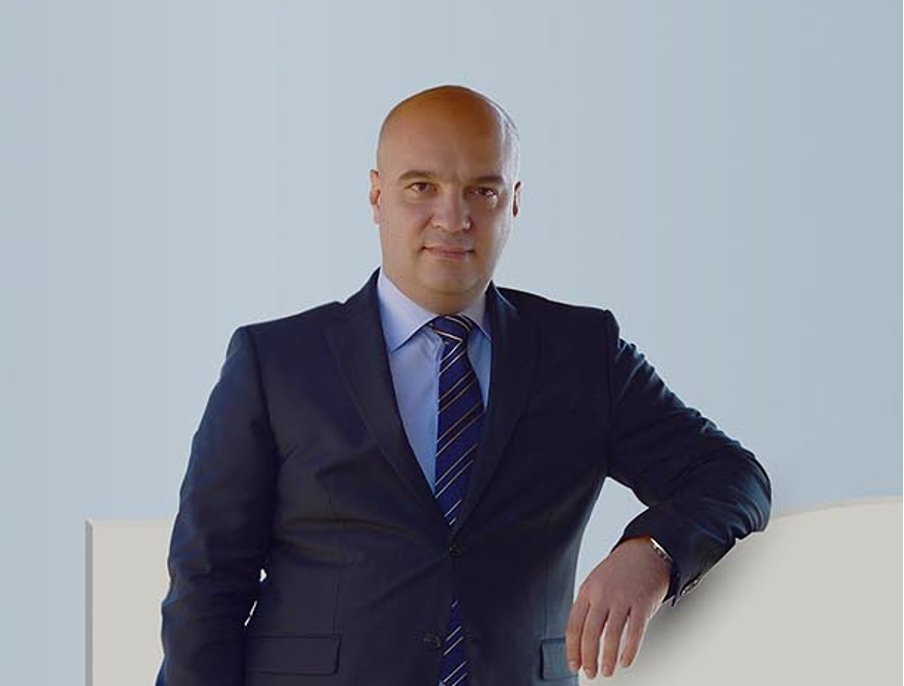
Prof. Ninoslav Marina, Ph.D.
University for Information Science & Technology St. Paul the Apostle
Brief biography:
Ninoslav Marina is Professor at the University of Information Science and Technology. He was Rector of the same university 2012 – 2021 and President of the Rector’s Conference of the public universities in the Republic of Macedonia 2015–2018. He obtained a PhD at the École Polytechnique Fédérale de Lausanne (EPFL) in 2004. In partnership with the Nokia Research Centre in Helsinki, his thesis was in the information theory domain with application to wireless communications. Ninoslav Marina was Director of R&D at Sowoon Technologies from 2005 to 2007, where he was leading the development of a headset to measure fatigue, stress and sleepiness of the European Space Agency astronauts. From 2007 to 2008, Dr Marina was Visiting Scholar at the University of Hawaii at Manoa, on a prestigious fellowship from the Swiss National Science Foundation. From 2008 to 2009, he worked as a postdoctoral researcher at UNIK Graduate Center, University of Oslo. During the period 2009–2012, he was a Visiting Postdoctoral Researcher at Princeton on a prestigious Marie Curie International Outgoing Fellowship. In 2014, Dr. Marina obtained funding under the Swiss-Brazilian Leading House program for collaboration with the University of Campinas in Brazil. Professor Marina co-authored more than 100 scientific papers, books and popular texts. He has been a guest professor at more than forty universities in all continents. He has raised more than 6 million US dollars through various public funding instruments both in academia and industry, including programs such as Innosuisse, Swiss NSF, the European Commission Framework Programs and the European Space Agency. He has been an evaluation and review expert of the European Commission. Dr Marina is a Senior Member of the Institute of Electrical and Electronics Engineers (IEEE) and Technical Program Committee Chair of the International Congress on Ultra Modern Telecommunications and Control Systems (ICUMT). In July 2015, in New York, Dr. Marina was a member of the Panel for informal interactive consultations on the World Summit on the Information Society.
Talk Title:
Integrating AI and Blockchain for Trustworthy, Human-Centric Precision Medicine
Abstract:
Precision medicine represents a transformative paradigm in healthcare, enabling personalised prevention, diagnosis, and treatment strategies based on an individual’s genetic, clinical, behavioural, and environmental characteristics. Recent advances in artificial intelligence (AI) have accelerated this transformation by providing powerful tools for predictive analytics, clinical decision support, disease risk stratification, and personalised therapeutic recommendations. Despite their considerable promise, AI-driven precision medicine systems face critical challenges related to data privacy, security, transparency, interoperability, and trustworthiness. The sensitive nature of health data, combined with concerns regarding algorithmic bias, opaque decision-making processes, and fragmented healthcare information systems, limits widespread adoption and public confidence. Blockchain technologies have the potential to be a complementary solution that addresses many of these challenges through decentralised, immutable, and transparent data management mechanisms. A blockchain is a distributed ledger with growing lists of records that are securely linked together via cryptographic hashes.
In this talk, we explain how the integration of AI and blockchain technologies may serve as a foundation for trustworthy, human-centric precision medicine. We present a conceptual framework that combines the analytical capabilities of AI with the security, traceability, and governance features of blockchain to create healthcare ecosystems that prioritise patient autonomy, ethical data stewardship, and clinical reliability. Within this framework, blockchain serves as a decentralised infrastructure for secure storage, validation, and exchange of healthcare data, while AI leverages these trusted datasets to generate actionable insights for personalised care. Smart contracts facilitate automated consent management, data-sharing agreements, and healthcare transactions, enabling patients to retain greater control over how their information is accessed and utilised.
The proposed integration offers several advantages across key domains of healthcare. First, blockchain-enhanced data integrity ensures that AI models are trained on reliable and tamper-resistant datasets, reducing the risk of compromised clinical decisions. Second, decentralised identity management and cryptographic security mechanisms strengthen privacy protection while supporting secure interoperability among healthcare providers, researchers, and institutions. Third, transparent audit trails improve accountability and regulatory compliance by documenting all data access and algorithmic interactions. Last but not least, blockchain-enabled federated and collaborative learning approaches facilitate multi-institutional research without requiring centralised data aggregation, thereby supporting large-scale precision medicine initiatives while preserving patient confidentiality.
From a human-centric perspective, the convergence of AI and blockchain promotes trust by enhancing transparency, explainability, and patient empowerment. Patients can actively participate in decisions regarding data ownership and sharing, while healthcare professionals benefit from verifiable data provenance and more reliable AI-driven recommendations. Furthermore, the framework aligns with emerging ethical and regulatory requirements emphasising fairness, accountability, privacy, and patient rights in digital health systems.
Despite its significant potential, the integration of AI and blockchain has challenges, including scalability limitations, computational costs, governance complexities, and the need for standardised regulatory frameworks. Addressing these barriers will require interdisciplinary collaboration among healthcare practitioners, data scientists, policymakers, and technology developers.
The convergence of AI and blockchain represents a promising pathway toward trustworthy, transparent, and patient-centred precision medicine. By combining intelligent analytics with secure and decentralised data governance, this integrated approach has the potential to improve healthcare outcomes, strengthen public trust, and advance the next generation of personalised medicine. We strongly believe that AI, together with advances in biotechnology and information technology, will contribute greatly to improving human longevity and overall human well-being.

Dr. Steve Chan
S&T Advisor
Brief biography:
Dr. Chan serves as a Science & Technology (S&T) Advisor for various organizations within government and industry. He is an inventor with 14 U.S. and international patents, and he is the author of 92 peer-reviewed book chapters, journal articles, and conference papers, which include 38 IEEE papers (for 65 of the refereed publications, he is first author, and 20 of these received Best Paper/Best Presentation awards). He has served as Chief Scientist/Principal Investigator for dozens of governmental/intergovernmental reports (e.g., U.S. Government, ASEAN Member States, United Nations), co-founded numerous research centers within industry (e.g., Fortune 500) as well as academia, and served as center advisor for National Science Foundation-funded consortiums of industry and government laboratories. He previously served as Vice President/Chief Innovation & Strategy Officer for IBM’s Safer Planet & Smarter Cities Division, Chief Technology Officer/Chief Architect roles at MIT, and Senior Fellow at Harvard. He is an alumnus of both MIT and Harvard. His presentations and lectures have been featured at the White House, National Research Council of the National Academies, and World Congress on Information Technology.
Talk Title:
The Prospective Paradox of Self-Monitoring at a Hyperscale Artificial Intelligence Data Center
Abstract:
This era of Artificial Intelligence (AI) has been marked by a dramatic increase in the number of hyperscale AI Data Centers (AIDC) being built. The computational density at these AIDC has surged, and the infrastructural and utilities requirements have also burgeoned. As AIDCs endeavor to leverage their own AI capabilities to self-monitor their extensive AIDC complexes, certain prospective paradoxes are unveiled. It turns out that, unless carefully managed, the AI-facilitated self-monitoring has the potential to dramatically increase the very infrastructural and utilities requirements that it was originally endeavoring to constrain.